

Ferry travel can feel straightforward until you add three suitcases, shopping bags, a buggy, sports kit or a tired family into the mix.
A pre arranged ferry transfer taxi can make the awkward part of the journey much easier, giving you a clear pickup plan, suitable space for luggage and a calmer route from the terminal to your final stop.
Why luggage changes the whole journey
Travelling light gives you options. You can walk further, change plans quickly and squeeze into whatever transport is available. Luggage heavy travel is different. Every extra bag affects how quickly you can move, how easily you can queue and how comfortable the onward journey feels.
That matters most at ferry terminals because the trip does not end when the ferry arrives. You still need to get from the terminal to where you are staying, working or meeting someone. If you have suitcases, shopping, mobility aids, work equipment or children to manage, the short stretch after arrival can become the most tiring part of the day.
Pre arranging a taxi helps because it removes guesswork. Instead of working out transport after disembarking, you already know someone is expecting you. You can focus on collecting your bags, keeping your group together and leaving the terminal without a rush.
This is especially helpful when bags are bulky rather than simply heavy. A large suitcase, folded pushchair, golf bag or boxed purchase may be awkward to carry even if it is not difficult to lift. A taxi booked with luggage in mind gives you a more practical onward plan than hoping everything will fit when you arrive.
Terminal pickup reduces waiting and decision making

After a ferry crossing, most passengers want the next step to be simple. You may be tired, watching the time or trying to keep track of several bags at once. Having a taxi pickup arranged in advance reduces the number of decisions you need to make at the terminal.
A good booking should include the ferry details, expected arrival time, number of passengers and a clear note about luggage. This helps the taxi operator understand what kind of pickup is needed and where the driver should meet you where permitted by the terminal layout.
It is worth allowing for the natural rhythm of ferry travel. Disembarking can take a little time, especially when many passengers are leaving at once. If you have luggage in a cabin, locker or storage area, you may need a few extra minutes before you are ready to meet your driver. Sharing this when booking makes the whole transfer feel more relaxed.
For people who do not travel by ferry often, the biggest benefit is reassurance. You are not trying to compare transport options while standing beside your bags. You already have a plan. Pauls Taxis offers ferry transfer taxi booking for passengers who want that onward step arranged before they travel.
Vehicle space matters more than people think

When booking a ferry transfer with luggage, passenger count is only half the story. Two people with two small bags may need very different space from two people with four suitcases and a folded wheelchair. Mentioning luggage clearly at the booking stage helps match the journey to the right vehicle where possible.
Useful details include the number of large suitcases, any awkward items and whether anything needs careful handling. Shopping bags, musical instruments, pushchairs, pet carriers and mobility equipment can all affect loading space. You do not need to over explain, but a simple description helps avoid surprises.
Think about access too. If anyone in the group finds it difficult to walk far with bags, say so when arranging the transfer. The driver can then plan the pickup as practically as the terminal rules allow. Even small details, such as needing a few extra minutes to load luggage, can make the journey feel smoother.
Vehicle space is not just about fitting everything in. It is also about comfort. Bags piled around passengers can make a short journey feel cramped. When the transfer is planned properly, luggage can be loaded more sensibly and passengers can sit down without feeling squeezed by their own belongings.
A calmer onward journey after a busy crossing

The ferry crossing itself may be enjoyable, but the changeover at the other end can feel busy. People are moving in different directions, vehicles are leaving, and passengers are trying to find their next connection. With heavy or awkward bags, that environment can feel more stressful than it needs to.
A pre arranged taxi gives the journey a defined finish. You leave the terminal, load your belongings and continue straight to your destination. There is no need to move bags between several forms of transport or wait around with everything at your feet.
This can be particularly useful for families, older passengers and anyone travelling after a long day. Children may be tired, adults may be carrying extra items and everyone benefits from knowing the next step is already sorted. The taxi becomes a practical bridge between the ferry and the rest of the trip.
It also helps when your destination is not close to the easiest public transport route. Ferry terminals are designed around arrivals and departures, but your final stop may be a private address, a holiday property, a meeting venue or somewhere that would require changes with bags. A direct taxi journey can reduce that friction.
How to book so the transfer runs smoothly
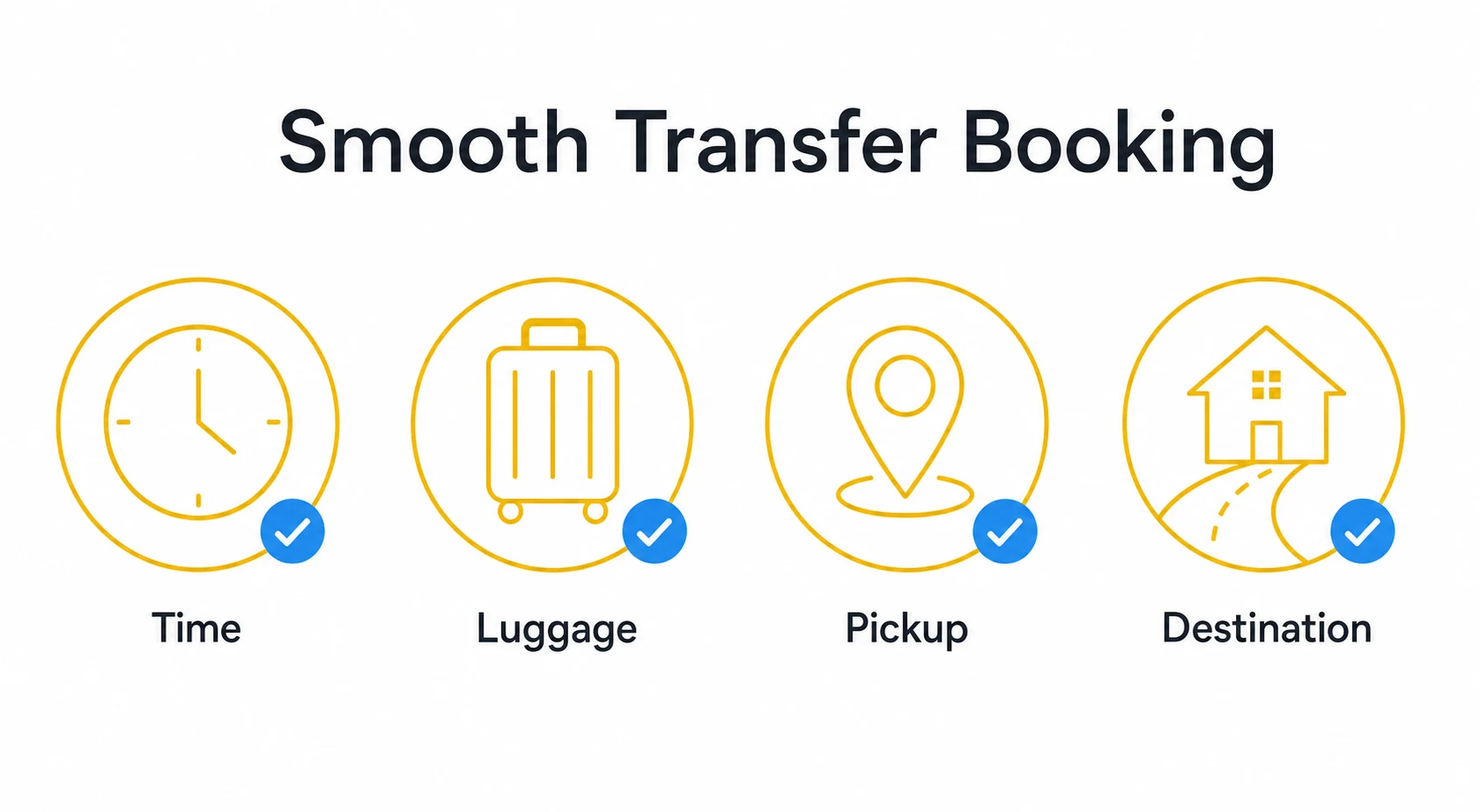
A good ferry transfer starts with clear information. Give the ferry route details if asked, the scheduled arrival time, the number of passengers and the amount of luggage. If there are bulky items, mention them separately rather than assuming they count as normal bags.
It also helps to share a mobile number that will be switched on when you arrive. Ferry travel can involve small timing changes, and being contactable makes it easier to coordinate the pickup. If your phone battery is low, consider writing down the taxi number or keeping booking details somewhere easy to find.
Pack with the pickup in mind. Keep essentials such as keys, medication, travel documents and chargers in a smaller bag that stays with you. If your larger cases are loaded into the vehicle, you do not want to realise that something important is at the bottom of one of them.
If you are travelling with a group, decide before arrival who is responsible for which bags. It sounds simple, but it prevents confusion at the terminal. One person can handle communication with the driver while others gather luggage and check nothing has been left behind.
For broader travel planning, it can also help to think about how ferry transfers connect with other journeys. Passengers comparing onward travel options may find Pauls Taxis useful for other pre arranged trips too, including airport transfer planning when luggage and timing matter.
When a ferry transfer taxi is most useful
A taxi is helpful whenever the onward leg would be awkward with bags. That might be a family break with several suitcases, a shopping trip with bulky purchases, a work visit with equipment or a journey where someone in the group needs a more direct route.
It is also useful when arrival times are not ideal for relaxed travel. Early starts, late returns and busy periods all make it harder to stand around with luggage while working out the next move. A booked taxi keeps the plan simple.
Passengers travelling to temporary accommodation often benefit too. Finding a new address while carrying bags is rarely fun, especially if the property entrance, parking area or reception point is not obvious. A direct taxi journey can take you closer to where you actually need to be.
The key is to treat the taxi as part of the travel plan rather than an afterthought. When you arrange it at the same time as the ferry, accommodation or appointment, the whole journey feels more joined up. The result is not just convenience. It is less carrying, less waiting and fewer decisions at the busiest point of the trip.
- Luggage heavy ferry trips are easier when the onward taxi is arranged before arrival.
- Clear booking details help match passengers, bags and vehicle space more sensibly.
- Terminal pickup reduces waiting, walking and last minute decision making.
- A direct taxi journey can make the final part of the trip calmer for families, shoppers and passengers with bulky items.
- Keeping essentials separate and sharing contact details helps the transfer run smoothly.
Frequently asked questions
Should I mention luggage when booking a ferry transfer taxi?
Yes. Give a simple description of how many large bags you have and mention any bulky items such as pushchairs, mobility aids, sports equipment or boxed shopping. It helps the operator plan the booking properly.
Can a taxi meet passengers at the ferry terminal?
In most cases a pickup can be arranged around the terminal, subject to the rules and access points at that site. The best approach is to share your ferry details and follow the pickup instructions given when you book.
What if the ferry arrival time changes?
Keep your phone on and share the best contact number when booking. Taxi operators are used to travel timing changes, and clear communication makes it easier to adjust the pickup where possible.
Is a ferry transfer taxi useful for a short onward journey?
Yes, especially if you have several bags, children, shopping or bulky items. Even a short journey can feel awkward when you are carrying too much, so a direct taxi can make the final stretch much easier.
Plan the easy part before you travel
If your ferry trip includes suitcases, shopping or bulky bags, arrange your onward journey with Pauls Taxis before you set off and arrive with one less thing to sort out.