

Arriving by ferry should feel simple, but the timing can be awkward if your onward journey has not been planned. A crossing can land slightly earlier or later than expected, passengers may take time to disembark, and luggage or children can add a few extra minutes before you are ready to leave.
The good news is that a little preparation makes the whole journey calmer. By thinking about your arrival time, your party size and what happens after the ferry docks, you can arrange a taxi that fits the way people actually travel, not just the time printed on a ticket.
Why ferry arrival times are only part of the plan
The arrival time shown on a ferry booking is useful, but it is not the same as the moment you will be standing outside ready for a taxi. There can be a short wait while the vessel docks, foot passengers may leave at a different pace from vehicle passengers, and busy sailings can mean a steady stream of people moving through the terminal area at once.
If you are travelling with hand luggage only, you may be ready quite quickly. If you have suitcases, children, mobility needs or a group to gather together, it is sensible to allow more breathing room. The aim is not to build in a long wait. It is to avoid booking a pickup time that assumes everything happens instantly.
A pre arranged taxi gives you a clearer plan for the part of the journey that starts after the crossing. Instead of arriving and then working out what to do next, you already know who is meeting you and where the onward journey is heading. Pauls Taxis explains its dedicated ferry transfer service for passengers who want that handover to feel straightforward.
How much time to allow after docking
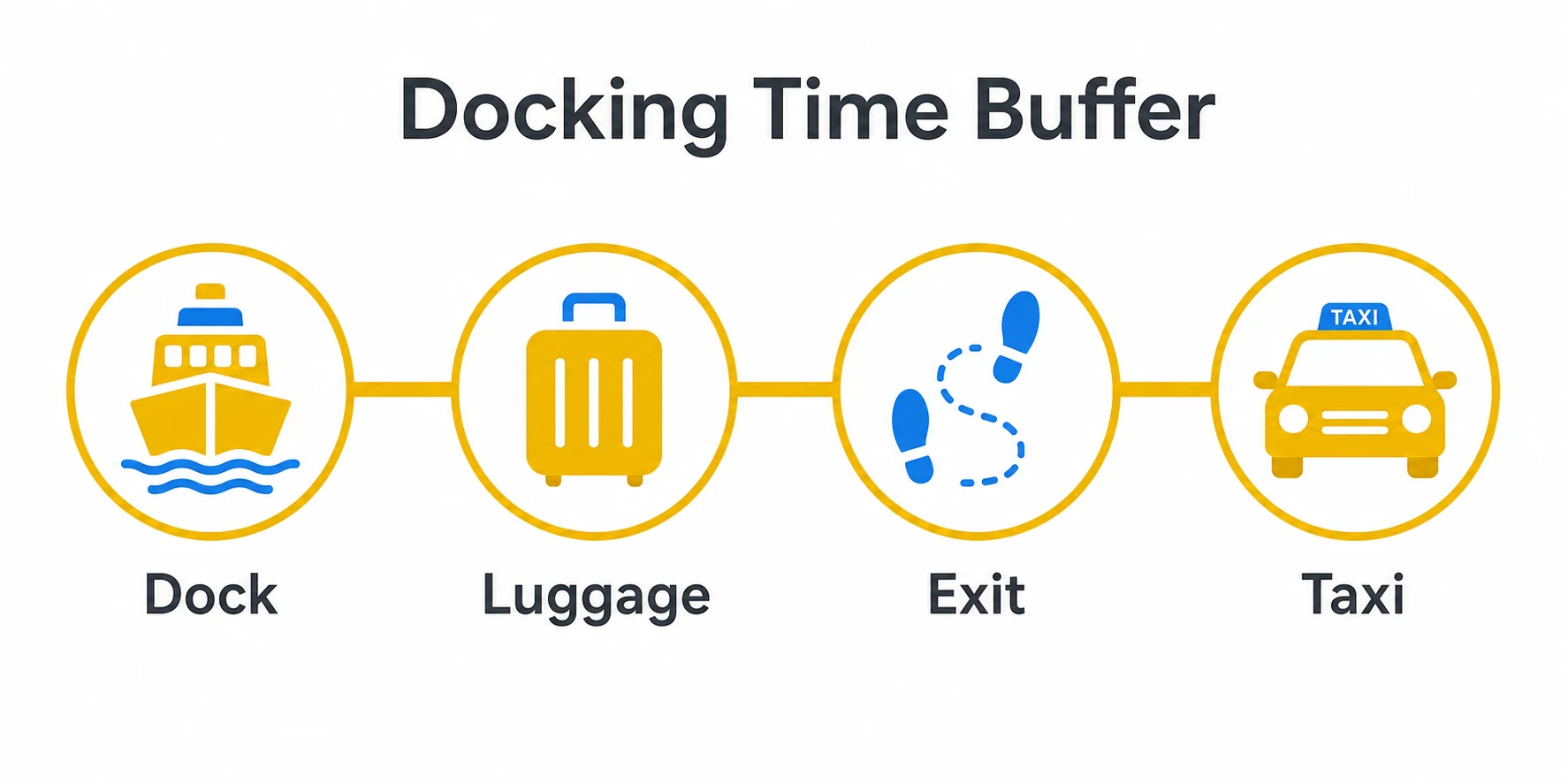
For many ferry arrivals, the best pickup time is not the scheduled docking time itself. A practical approach is to allow a short buffer after arrival, then adjust it depending on your situation. Foot passengers with light bags may need less time. Families, groups, passengers with larger luggage and people unfamiliar with the terminal may prefer a wider window.
Think through the small steps that happen between the ferry and the taxi. You need to leave the vessel, pass through the passenger areas, collect everyone in your party, check you have all belongings and find the agreed meeting point. None of these steps is difficult, but together they can make a tight taxi time feel rushed.
If you are booking in advance, share the ferry details rather than only giving a rough arrival time. A local taxi operator can use that information to understand the context of the pickup. You do not need to overcomplicate it. The ferry route, scheduled arrival time, passenger numbers, luggage and final destination are usually the details that matter most.
It is also worth thinking about your own tolerance for waiting. Some passengers prefer the taxi to be arranged as close as possible to arrival. Others would rather have a few calm minutes after disembarking before setting off again. The right timing is the one that suits your journey, your group and your plans for the rest of the day.
Why pre booking helps at busy arrival times

Ferry terminals can become busy quickly when a sailing arrives. Several passengers may be looking for onward transport at the same time, and demand can feel especially noticeable when the weather is poor, when people are travelling with luggage or when multiple journeys line up around similar times.
Pre booking helps because it turns the arrival into a planned connection rather than a search for transport. You have already given the details, the taxi is arranged around your sailing, and your onward route has been considered before you step off the ferry.
This is particularly useful if your destination is not close to the terminal. A journey across a wider area can take longer than visitors expect, especially if they have only looked at a map briefly before travelling. Local knowledge helps with realistic timing, sensible routes and pickup points that are easier to find.
If you are weighing up whether to arrange transport in advance, Pauls Taxis has also covered how pre booking your taxi can reduce travel stress. The principle is the same for ferry arrivals. The more important the onward journey is, the more valuable it is to remove guesswork.
What to tell the taxi company when you book

A good ferry taxi booking starts with clear information. You do not need to write a long itinerary, but the right details help the driver and booking team plan properly.
- Your ferry arrival time and crossing details.
- The number of passengers travelling.
- How much luggage you will have.
- Whether anyone needs extra time getting from the ferry to the pickup point.
- Your full onward destination.
- A mobile number that will work when you arrive.
Luggage matters because it affects the most suitable vehicle and how quickly the group can move. Passenger numbers matter for comfort and safety. Any accessibility or mobility detail helps avoid pressure at the terminal, especially if someone may need a little longer after disembarking.
If your plans change, let the taxi company know as soon as you can. Travel rarely improves when people keep changes to themselves. A quick update about a delayed sailing, an extra suitcase or a different passenger count can make the pickup easier for everyone.
For passengers connecting from flights before taking a ferry, timing can involve another layer of planning. Pauls Taxis has useful advice on why taxis suit airport transfer journeys, which is relevant when your day includes more than one form of transport.
Planning around delays and early arrivals
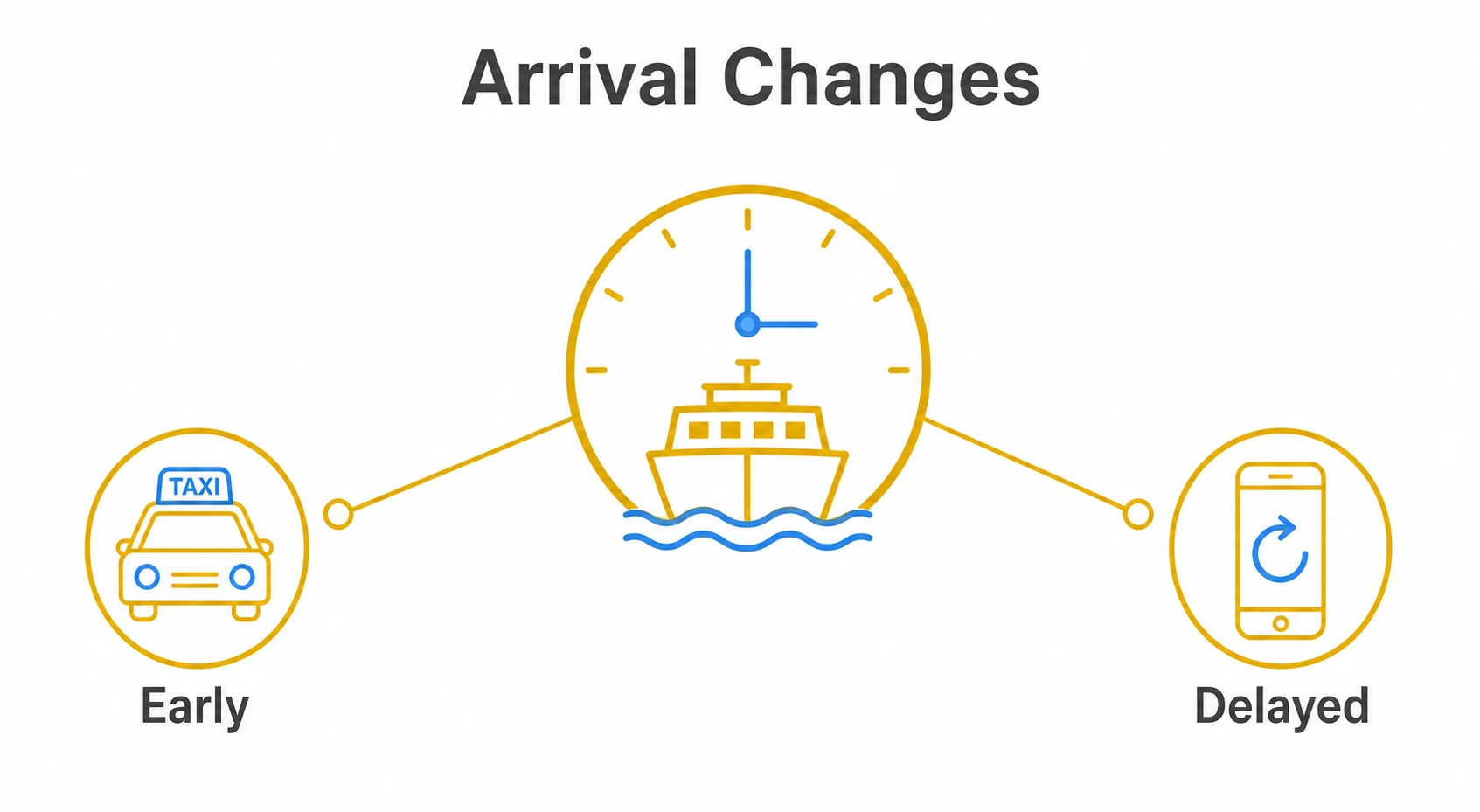
Ferry travel is usually predictable enough to plan around, but no passenger should assume every crossing will land exactly to the minute. Weather, loading, docking and operational factors can all affect timing. That does not mean the journey needs to feel uncertain. It simply means your taxi booking should be based on clear communication.
When you pre arrange a taxi, give the ferry details and keep your phone available. If your sailing changes, send an update as soon as possible. If you arrive earlier than expected, avoid wandering too far from the agreed meeting point without telling the driver or office. If you are delayed while leaving the ferry, a quick message can prevent confusion.
It is also sensible to agree the pickup point in plain terms. Terminal areas can have several exits, short stay areas and passenger routes. A clear meeting instruction is often more useful than a vague statement like outside the terminal. If you are unsure where to stand, ask when booking.
The goal is a calm connection. A local pre arranged taxi is not only about having a car waiting. It is about having a plan that can flex sensibly when ferry travel behaves like real travel, with small changes and human delays.
Making the onward journey more comfortable
Once you are away from the ferry, the next part of the trip should feel settled. That is where a taxi can be especially useful. You can travel directly to your accommodation, meeting, home or onward appointment without carrying bags between different services or working out connections after a crossing.
This can make a real difference for older passengers, families, business travellers and anyone arriving with more luggage than they would want to move repeatedly. It also helps when the final destination is not somewhere public transport serves neatly, or when the arrival time does not match other services well.
For visitors who want the arrival to feel simple from the moment they leave the ferry, Pauls Taxis has written about ferry to front door travel. It is a useful companion topic if you are thinking beyond pickup time and considering the whole arrival experience.
The best timing is rarely about shaving every possible minute off the journey. It is about avoiding the common frustrations, standing around unsure what to do, rushing through a terminal, or discovering too late that the onward trip takes longer than expected. A planned taxi gives the journey a clear next step.
- Do not treat the ferry docking time as the exact moment you will be ready for a taxi.
- Allow extra time if you have luggage, children, a group or mobility needs.
- Share ferry details, passenger numbers, luggage and destination when booking.
- Pre booking helps avoid terminal waiting and makes onward travel easier to manage.
- Keep your phone available so timing changes can be handled smoothly.
Frequently asked questions
Should I book my taxi for the ferry arrival time?
Usually, it is better to allow a short buffer after the scheduled arrival. You still need time to leave the ferry, gather your group and reach the agreed pickup point.
What happens if the ferry is delayed?
Let the taxi company know as soon as you can. Sharing your ferry details when booking also gives useful context if timings change.
Is a taxi useful if I only have a short onward journey?
Yes, especially if you have luggage, are arriving at a busy time or want a direct journey without working out transport after you land.
What details should I have ready before booking?
Have your ferry arrival time, passenger count, luggage details, destination and contact number ready. Mention anything that may affect how long it takes to reach the pickup point.
Plan your ferry pickup with confidence
If you want your arrival to feel simple, arrange your taxi before you travel. Pauls Taxis can help you plan a practical pickup time and a direct onward journey.